On May 21, 2026, the Wuhan Municipal Bureau of Agriculture and Rural Affairs published typical smart agriculture application scenarios, introducing the construction and operation practice of Wuhan Plant Ark Intelligent Technology Co., Ltd. in digital vertical plant factories. The case covers vertical cultivation, climate control and research collaboration, providing a useful reference for the smart cultivation industry.
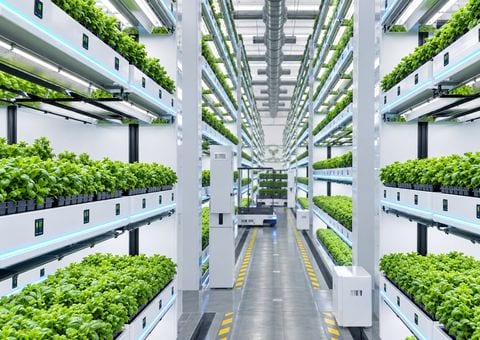
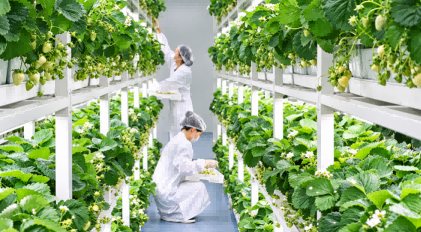
According to official information, Wuhan Plant Ark has built a large digital vertical plant factory of 1,920 square metres with a floor height of more than 10 metres, producing crops such as strawberries, and is working with research units including Huazhong Agricultural University and the Hubei Academy of Agricultural Sciences to advance protected agriculture and vertical cultivation technology. The official introduction also notes the company's continued investment in independent development of core technologies.
Vertical plant factories extend growing space from a single plane to multiple tiers, using artificial lighting, environmental control and fertigation to provide suitable growing conditions. This model improves space utilisation per unit of floor area, but its performance depends not only on the number of tiers — light distribution, airflow organisation, temperature and humidity uniformity, and ease of operation all matter.
Applying the model to crops such as strawberries also makes management more complex. Compared with short-cycle leafy greens, fruiting crops must balance vegetative growth, flowering and fruiting, and fruit quality, which places higher demands on coordinating environmental parameters and management timing. Expanding the crop range is therefore both a technology opportunity and a comprehensive test of cultivation protocols, equipment fit and operational capability.
The reference value of this case lies in showing a path that combines equipment development, crop cultivation and research collaboration. A plant factory needs a stable hardware system and a matching agronomic programme. Research institutions can support variety selection, cultivation trials and studies of growth patterns, while companies test the applicability of technical solutions through continuous operation, linking research outcomes with practical application.
For smart cultivation stations, vertical plant factory practice suggests that product design should start from a defined crop and use case. Plants differ in height, root space, light requirements and growth cycle, so equipment needs to set tier spacing, lighting method, nutrient solution management and maintenance access accordingly in order to deliver a more complete growing experience.
When evaluating such projects, yield, quality, energy consumption, labour, consumables and equipment maintenance should all be considered. The output of a single project demonstrates results under specific conditions but does not directly represent performance in other regions, with other equipment or under other business models. Sustainable operation still requires long-term data and full cost accounting.
The case published by Wuhan offers a window on the progress of vertical cultivation in the smart cultivation industry. As technology and agronomy continue to converge, achieving stable production in limited space and establishing repeatable management processes will remain important directions for the industry.
Source: Wuhan Municipal Bureau of Agriculture and Rural Affairs, “Typical Smart Agriculture Application Scenarios in Wuhan (1): Smart Cultivation with Real-time Automatic Monitoring and Environmental Control”