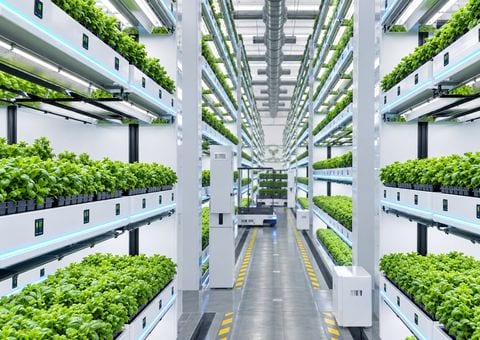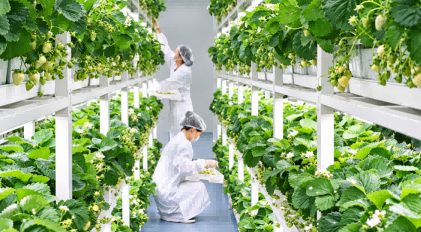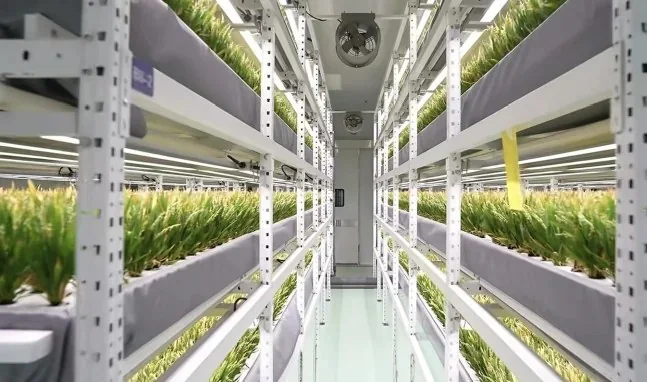
On October 14, 2026, Jinhua Daily (Zhejiang News) reported on the container-based smart cultivation cabin operated by Lianhe Intelligent Equipment (Jinhua) Co., Ltd. at the Zhejiang Normal University Jinhua Science and Technology Park. Built on a standard shipping container, the cabin achieves high-density, year-round Ganoderma cultivation in just over 30 square metres, offering an observable example of plant factories moving into medicinal plants.
Under conventional methods, 16 substrate bags are placed per square metre, or about 480 bags in 30-odd square metres, with a single harvest a year. Inside the smart cabin, the same footprint holds 5,000 bags; one crop takes just over 20 days, three to four crops can be harvested a year, and annual output of dried Ganoderma reaches 1.4 tonnes.
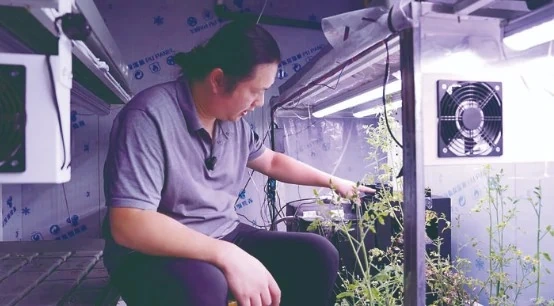
Li Yiming, founder of the company and associate professor at Zhejiang Normal University’s College of Economics and Management, said the cabin is modelled on a standard shipping container, occupies just over 30 square metres and contains thousands of growing positions, with a water and fertiliser reuse rate above 90 percent and savings of up to 95 percent. Such cabins can grow crops in gobi, desert and saline-alkali land, or even in factories without natural light, as long as water and power are connected. “Every cabin produced is equivalent to creating 36 square metres of arable land,” he said. The vertical, high-density model raises land-use efficiency to 3 to 200 times that of conventional agriculture, and with green power the whole cabin can achieve life-cycle carbon neutrality within eight years.
What to grow is also calculated. The cabin and its environmental control system are fixed investments, and ordinary leafy greens cannot cover the cost, so high-value medicinal herbs become the entry point. To bring out medicinal properties in a sealed environment, the team turns temperature, humidity and CO2 concentration into a set of stringent parameters; every Ganoderma has an identity code, and the size and weight of each crop are recorded. When the first-generation cabin was deployed in 2020 to grow amaryllis, plants near the door and the air-conditioner outlet were noticeably smaller, which led the team to propose the concept of an “environmental field system” that treats the growing space as a whole requiring uniform control. The product is now in its fourth generation, and the range has expanded from three species to more than a dozen high-value medicinal herbs and aromatic plants.
In 2025 the company set up an AI team: vision models act as the “eyes”, identifying species and growth stages, while text models search papers and patents and draft initial plans. Routine decisions run locally, and only complex problems are sent to cloud models, at a monthly cloud cost of about 8 yuan. A fifth-generation control terminal is being planned, targeting more than 128 crops.
At the fourth Global Digital Trade Expo in September 2025, the company unveiled the fourth-generation fully automatic aeroponic system. Experimental data showed a water-saving rate above 95 percent, a roughly halved breeding cycle for flowers, and a 13 to 15 percent increase in active ingredients in medicinal herbs; a Middle Eastern buyer signed an order worth tens of millions of yuan on the opening day. A large Ganoderma base in Zhoushan, designed for 40,000 to 60,000 sticks with 20,000 bags in the first batch, is planned to produce 20 tonnes of dried Ganoderma a year on 500 square metres.
The case shows that a commercial loop for container plant factories depends on three links working together: choosing crops with a high unit price that can absorb the fixed investment; turning experience-based judgement into reproducible parameters and solving uneven conditions inside the cabin; and recording the inputs and outputs of every crop so that cost accounting has a basis. These are consistent with the engineering approach of smart cultivation stations in uniform environmental control, parameter logging and remote operation.
As medicinal herbs, edible fungi and forage enter container cultivation, container plant factories are moving from equipment demonstrations to accountable production units. Whether single-cabin economics can be replicated across more crops and climates still requires longer-term data to verify.
Source: Jinhua Daily / Zhejiang News, “Growing immortal herbs in a smart cabin”