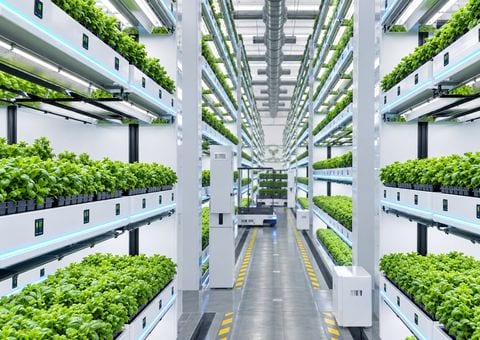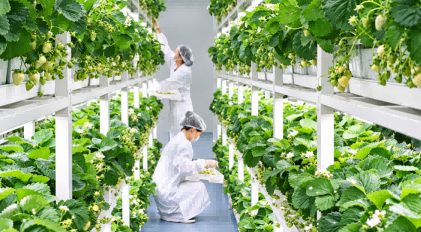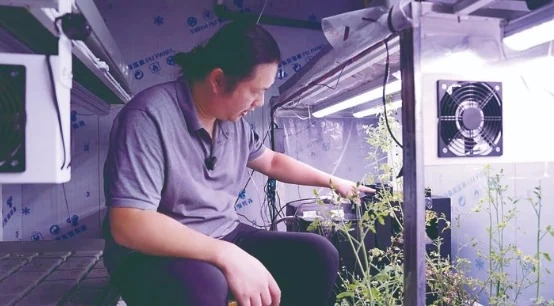
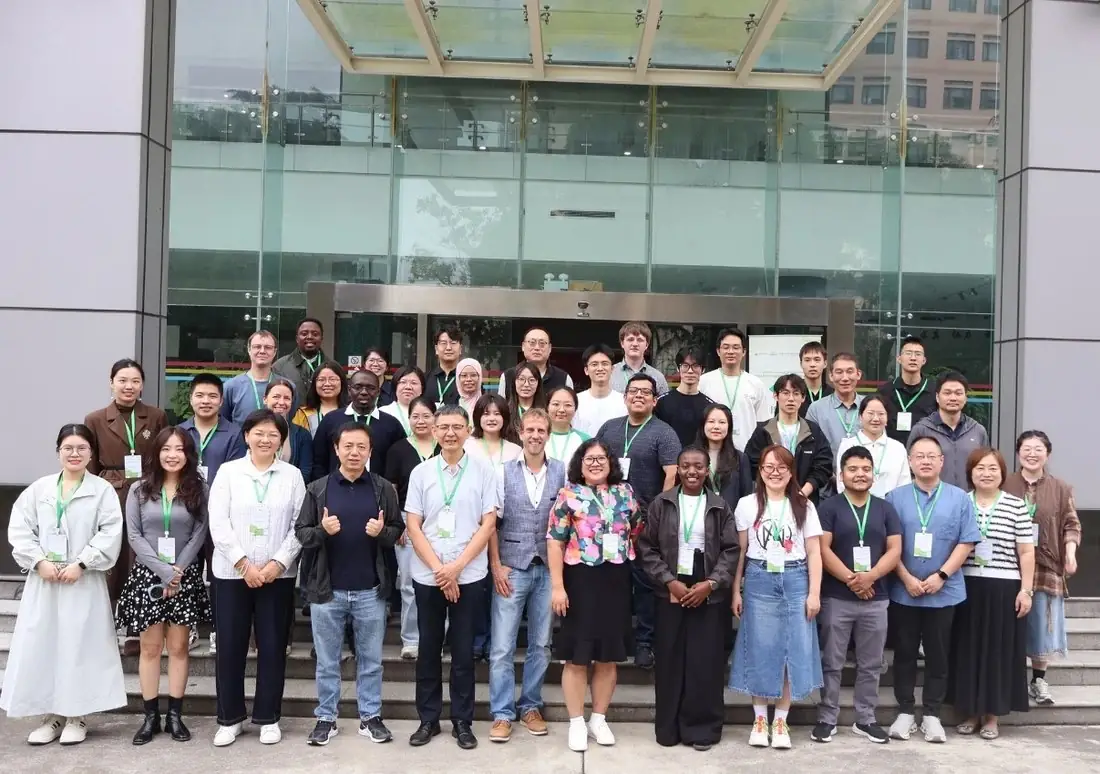
On October 19, 2026, the international master class on plant factory system modelling and phenotyping, jointly founded by the Center for Excellence in Molecular Plant Sciences (CEMPS) of the Chinese Academy of Sciences and Wageningen University & Research (WUR), opened in Shanghai. The class is supported by the PIFI Young Leader programme of the CAS Bureau of International Cooperation.
Building on the first summer school in 2025, this year’s programme extends to high-throughput phenotyping, deep learning, multispectral and 3D imaging and digital twins. It covers crop phenotyping image acquisition and analysis, machine learning and deep learning algorithms, modelling of photosynthesis and metabolic systems, GroIMP functional-structural plant modelling (FSPM), microclimate simulation in plant factories, computational fluid dynamics (CFD) and intelligent environmental control, using a format that combines lectures, hands-on coding and group challenges.
The course is coordinated by Professor Zhu Xinguang of CEMPS and Dr Gert Kootstra, Dr Gerrit Polder and Dr Zhen Liu of WUR. Lecturers include Professor Zhu Xinguang of CEMPS, Professor He Dongxian of China Agricultural University, Professor Gao Naiping of Tongji University, Associate Professor Wang Yu of Nanjing University, Dr Michael Henke of the Yazhou Bay National Laboratory, and Dr Katarina Smolenova, Dr Simon van Mourik and Dr Sun Congcong of WUR, with industry experts Han Zhiguo, Zhou Qiang and Liu Zhen also joining the programme.
Participants come from nine countries and more than 20 universities, research institutes and leading companies. They will also visit the CEMPS artificial climate chambers and demonstration bases such as the Chongming National Protected Agriculture Engineering Technology Research Centre.
The shift in emphasis is notable. Earlier plant factory training focused on nutrient formulas and light recipes; this programme places phenotyping, growth models and microclimate simulation on an equal footing. Behind this is an industry consensus: once hardware and energy consumption become standardised, stable output depends on the ability to see crop status and to calculate environmental response.
For equipment manufacturers and operators, these capabilities take the form of sensor layout, data interfaces and the openness of control strategies. Equipment that only outputs fixed parameters is hard to connect with models; only by retaining environmental data, crop images and control records in a readable form can continuous improvement have a basis. This is consistent with the design approach of smart cultivation stations in remote operation and data presentation.
CEMPS and WUR have now run joint training on plant factory system modelling and phenotyping for two consecutive years, with content moving from concept introduction to algorithm practice. Such foundational work takes time to accumulate, but its results will gradually show in control precision and production stability.
Source: Center for Excellence in Molecular Plant Sciences, Chinese Academy of Sciences, “Joining hands again for the future of agriculture: Sino-Dutch master class opens in Shanghai”