01|Process Route Overview
01 Process Route Overview: Standardized Container + Multi-Tier Shelving
◆ Fully modular design, no civil works, multiple fruiting batches all year round
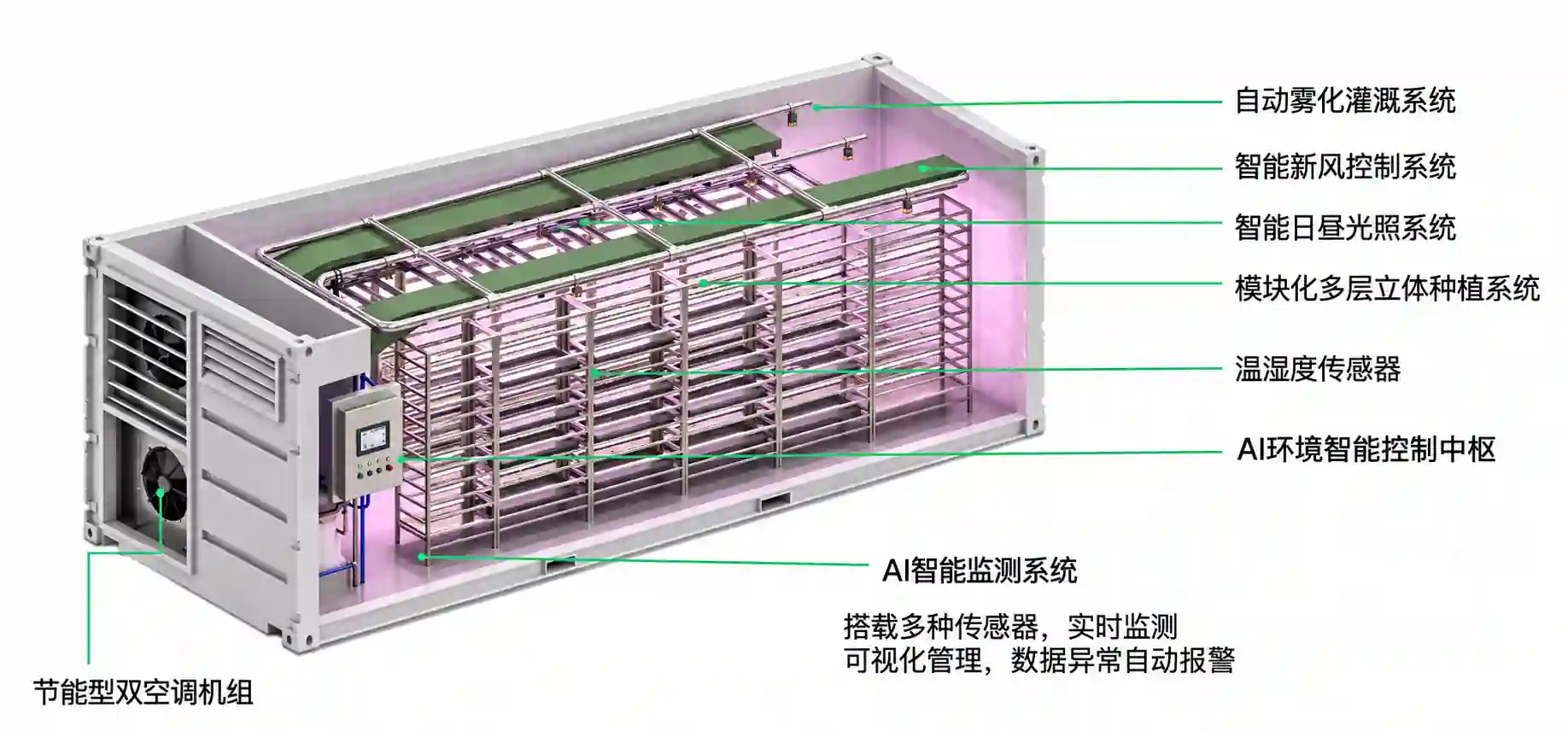
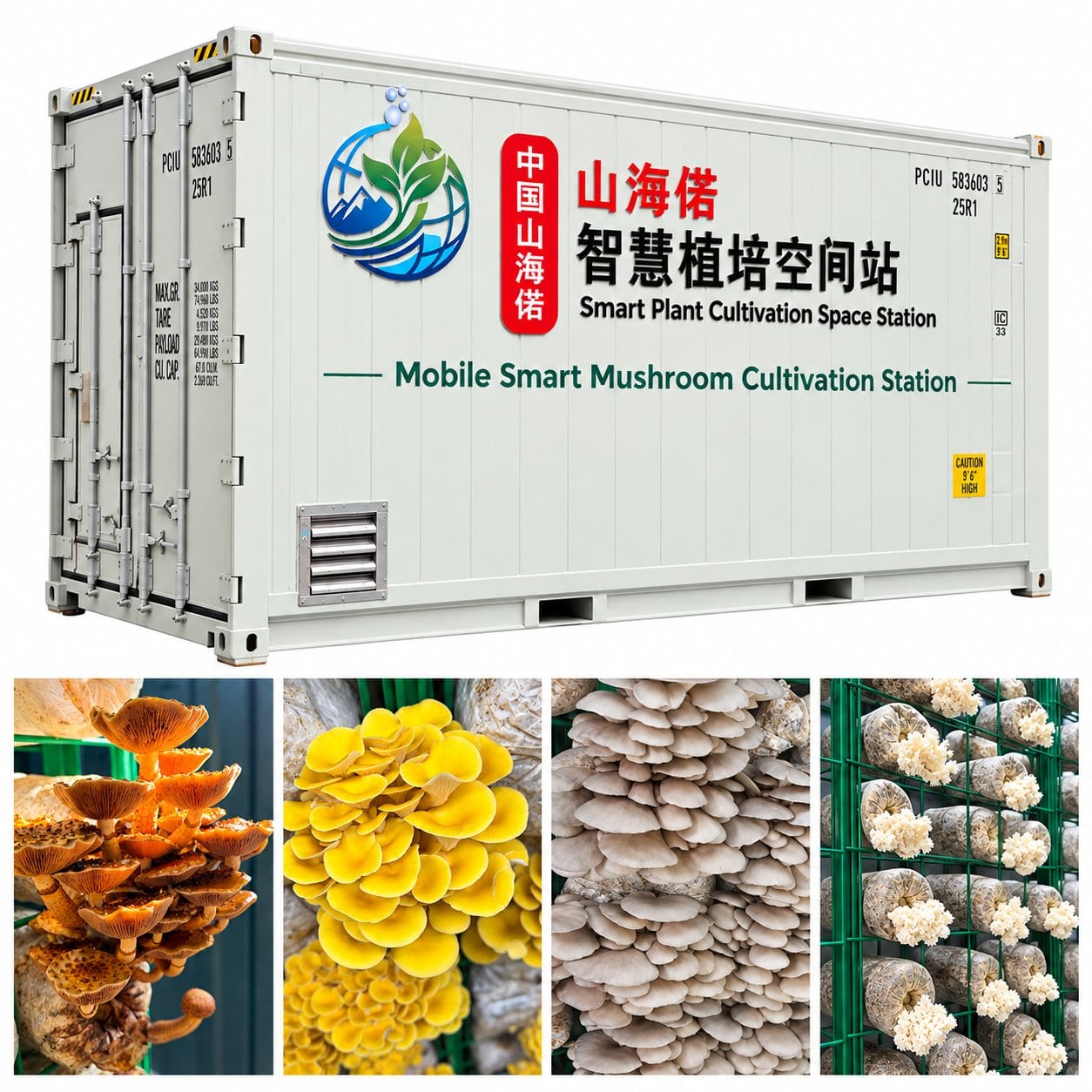
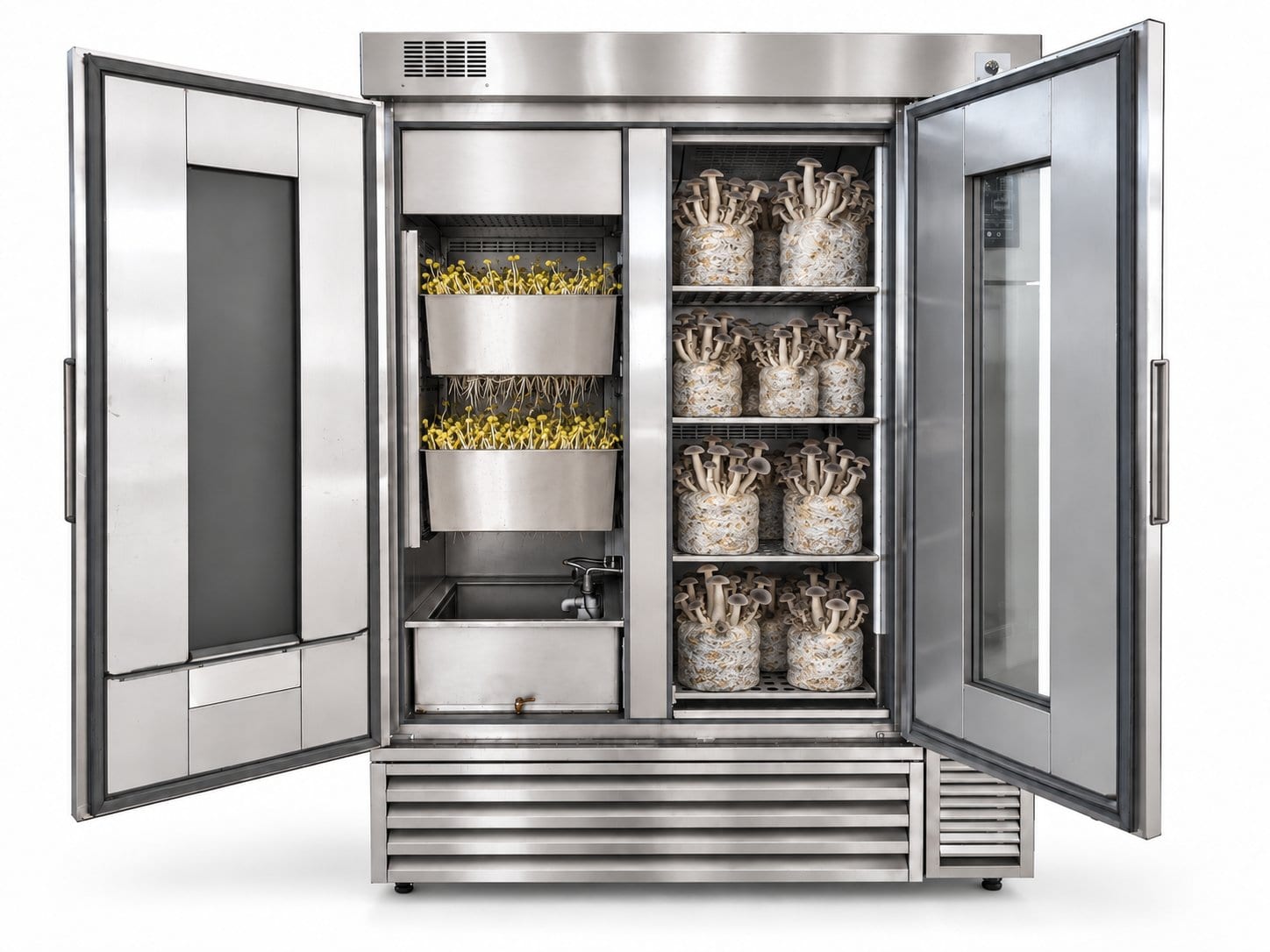
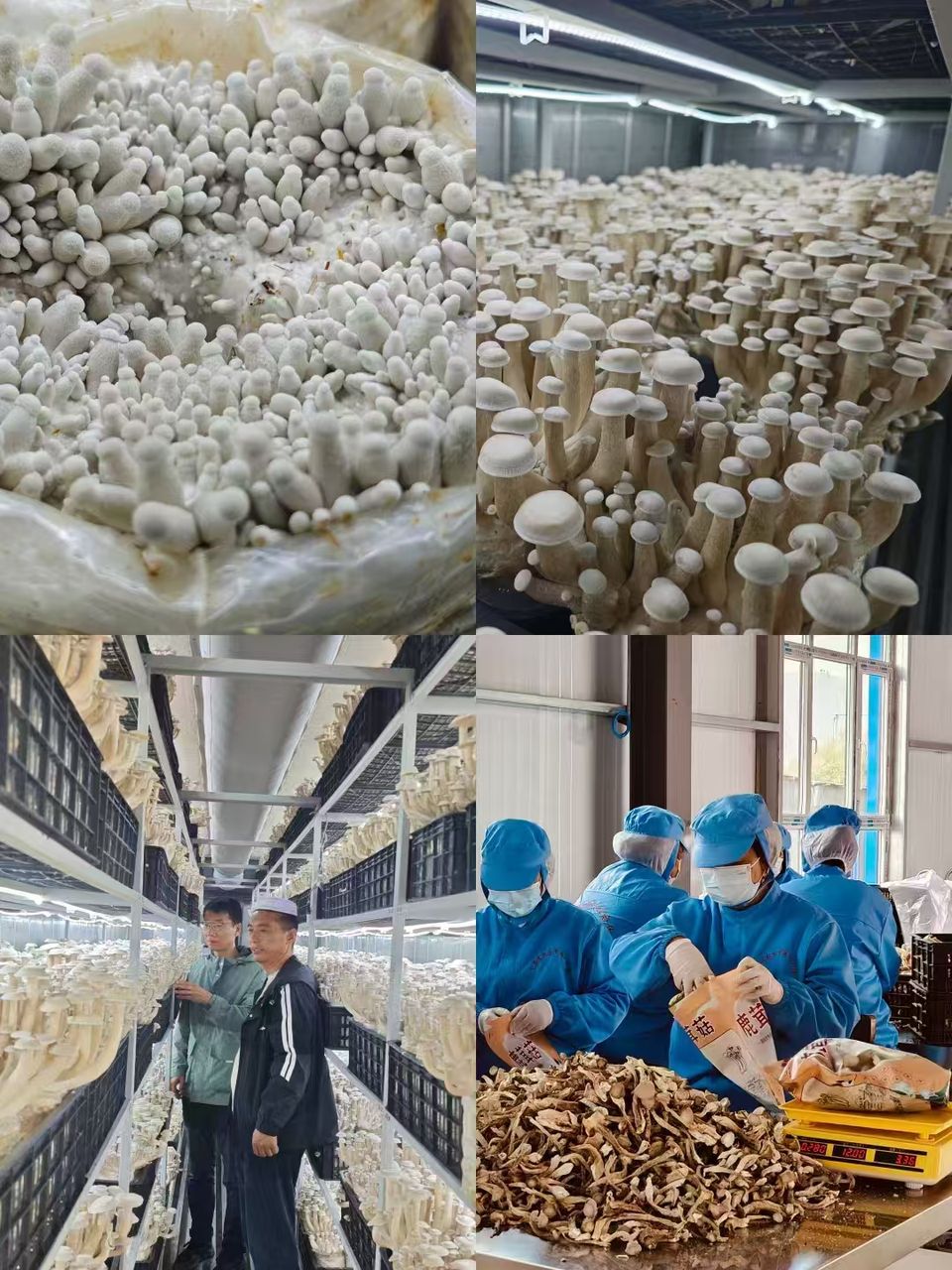
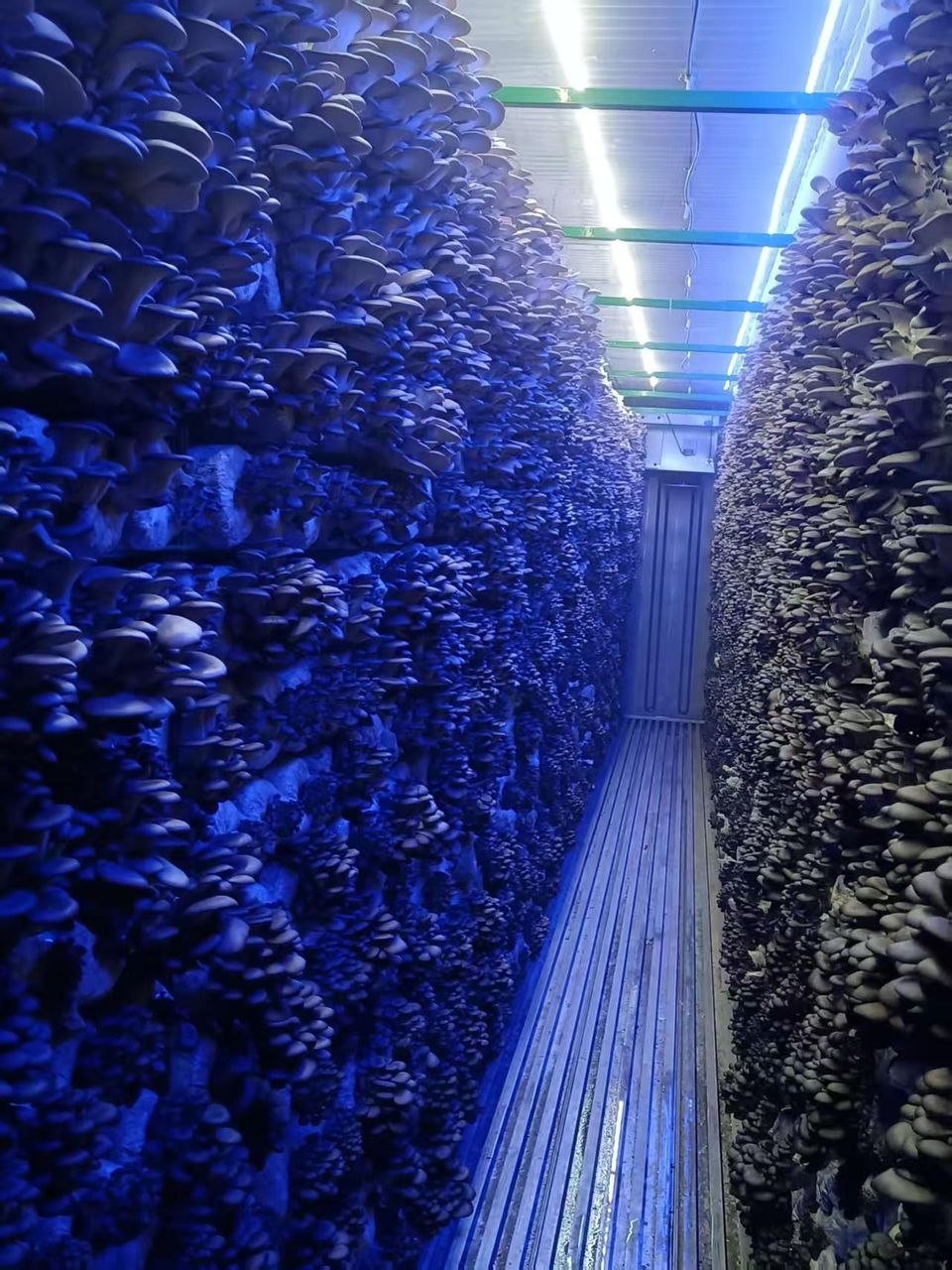
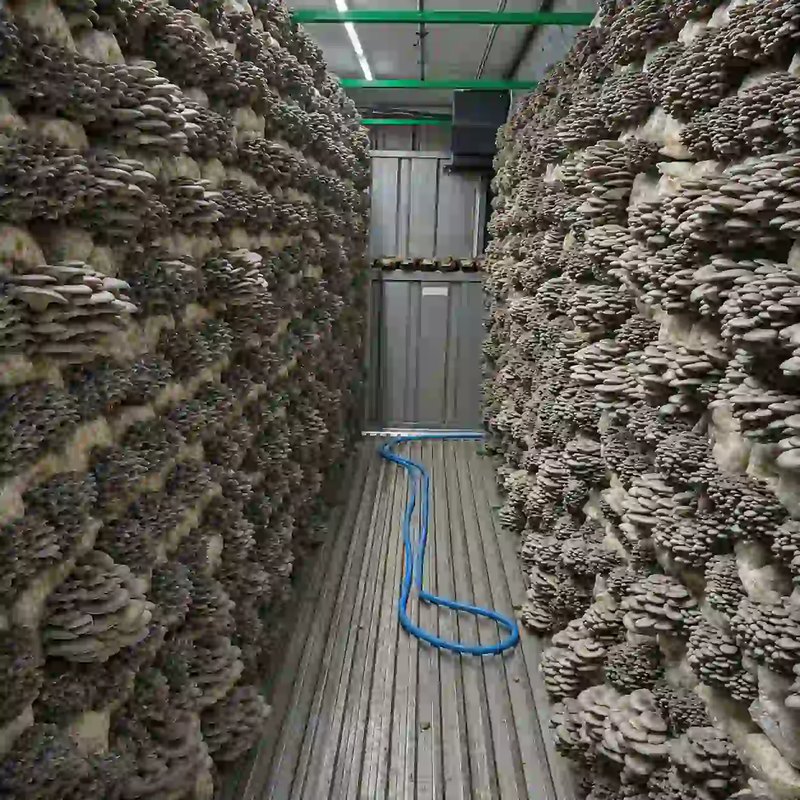
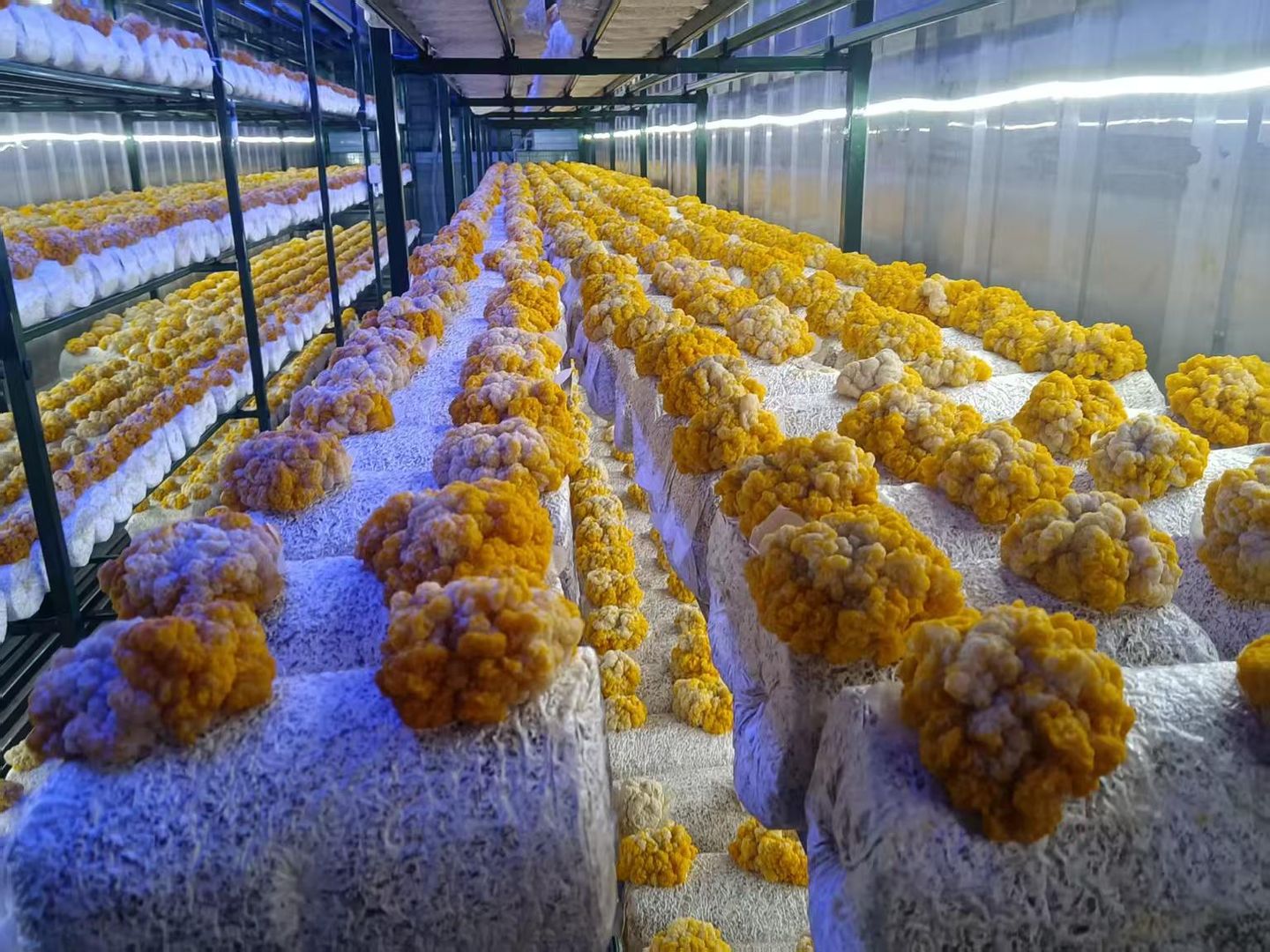
Mushroom cultivation uses a standard 40ft container-class cabin as the carrier in a fully modular design: flat, tightly sealed external surfaces with anti-corrosion and waterproofing, combined with a fresh-air filtration system that keeps out external spores, pests and dust. Grid shelving inside provides multi-tier cultivation with far higher space utilization than conventional mushroom sheds; oyster mushroom, shiitake, golden oyster, golden ear, lion’s mane and other edible fungi can be grown in multiple batches year-round, independent of season and weather. Production runs as a repeating cycle: substrate bag loading → mycelium colonization → positioning and scratching → fruiting management → post-harvest cabin cleaning → next batch, with fruiting-stage climate parameters executed automatically by the control system according to each variety’s process recipe.
02|Environmental Control
02 Environmental Control: 24-Hour Closed-Loop Temperature and Humidity
◆ 16–24°C staged setpoints, 85–95% fruiting humidity, CO2 regulated by variety
Fruiting-stage climate is held around the clock by a fully automatic control system: an intelligent full-DC inverter compressor regulates cabin temperature with more than 30% energy savings versus conventional heating/cooling; fruiting temperature is adjustable in stages from 16 to 24°C according to variety and growth stage; humidity is maintained at 85–95% by high-pressure and ultrasonic mist working in tandem, with uniformity better than ±5%RH; CO2 concentration is adjusted in step with the in-cabin change rate and the variety’s growth process by linking to the fresh-air system, and remains stable at night, avoiding the quality loss, deformation and yield reduction caused by day–night temperature swings and environmental fluctuation.
03|Process Essentials
03 Process Essentials: Sealing, Cleanliness and Contamination Control
◆ Fully enclosed cabin plus filtered fresh air cuts contamination at the source
The biggest risks in mushroom production come from contaminating microbes and pests. The fully enclosed cabin, combined with a filtered fresh-air system, keeps out external spores, insects and dust; temperature, humidity and CO2 sensors report continuously, and the system corrects deviations and raises alarms automatically, replacing the blind spots of manual night inspection. After each harvest the cabin is cleaned, disinfected and batch data recorded; a validated process can be replicated quickly to additional cabins, supporting scale-up across sites.
04|Variety Parameters and Batch Scheduling
04 Variety Parameters and Batch Scheduling: One Hardware Set, Multiple Process Recipes
◆ The same climate hardware takes variety-specific recipes, keeping batches in continuous rotation
The climate hardware is common; the differences live entirely in the process parameters: temperature is staged within the 16–24°C fruiting window by variety and growth stage; humidity is held at 85–95%RH with the mist-to-fresh-air ratio trimmed for each fruiting stage; CO2 thresholds and air-exchange frequency follow each variety’s sensitivity to ventilation. Parameters are downloaded to the control system as a program, so changing variety means switching the recipe rather than rebuilding the cabin. Batches rotate through substrate loading → colonization → scratching → fruiting → cleaning → next batch: the cleaning stage covers residue removal, disinfection and equipment checks, and the next batch starts only once cabin cleanliness is restored, so spores left from the previous crop do not become the next crop’s contamination source. Climate curves, yields and exceptions are archived per batch and used to refine the optimal parameter set for each variety.