01|Process Route Overview
01 Process Route Overview: Sealed Container + Short-Cycle Hydroponic Production
◆ Cloud control of every climate factor across the growth cycle, continuous production all year round
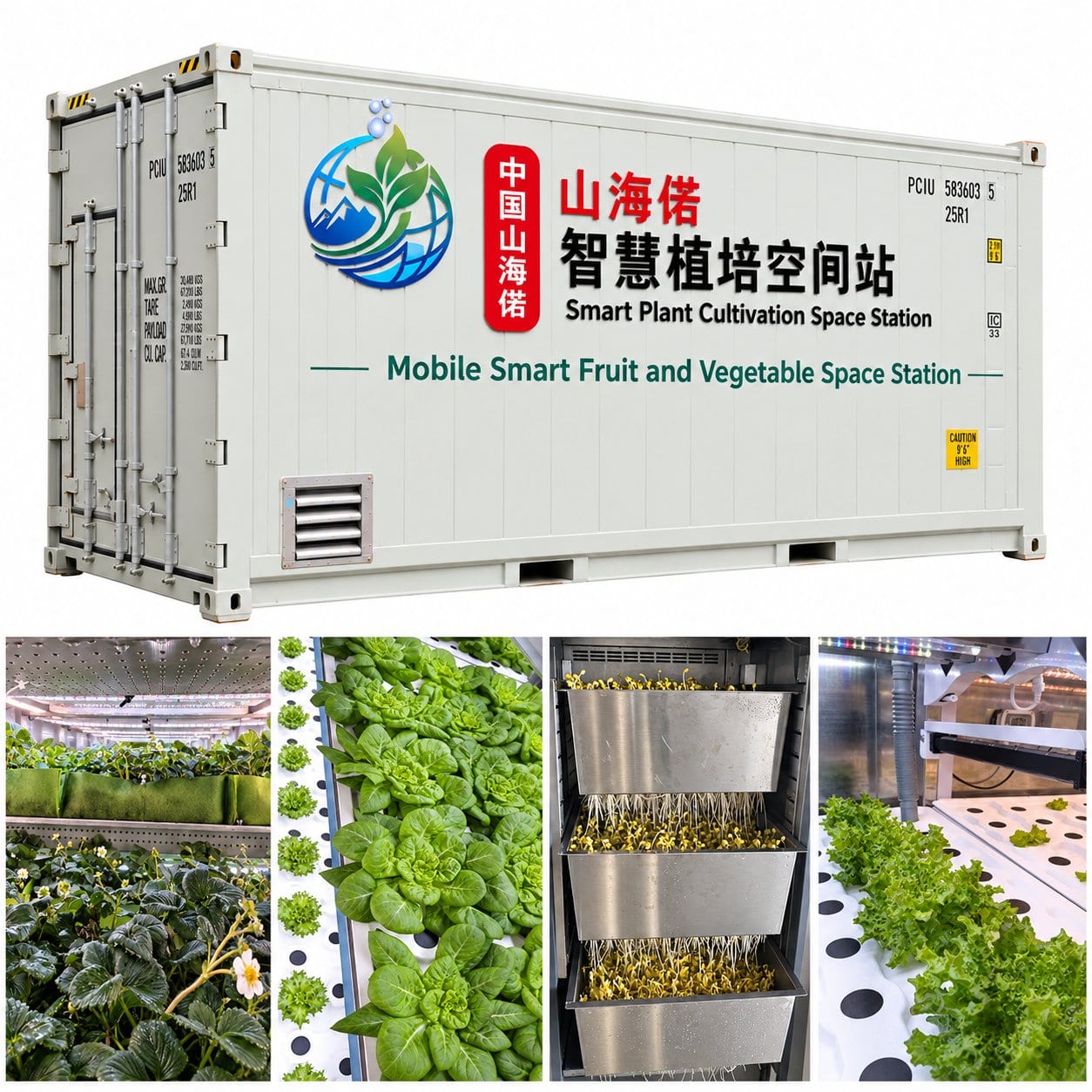
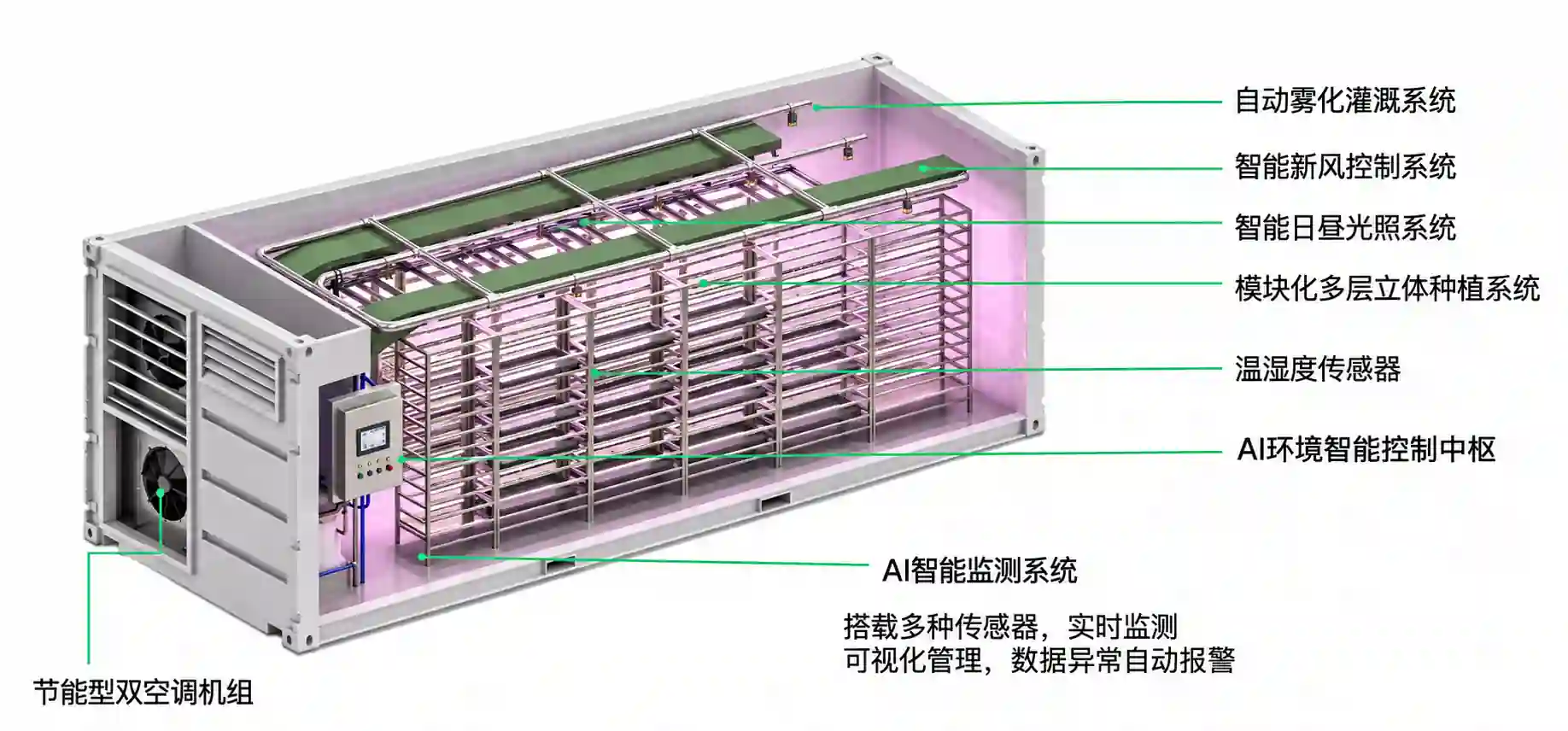
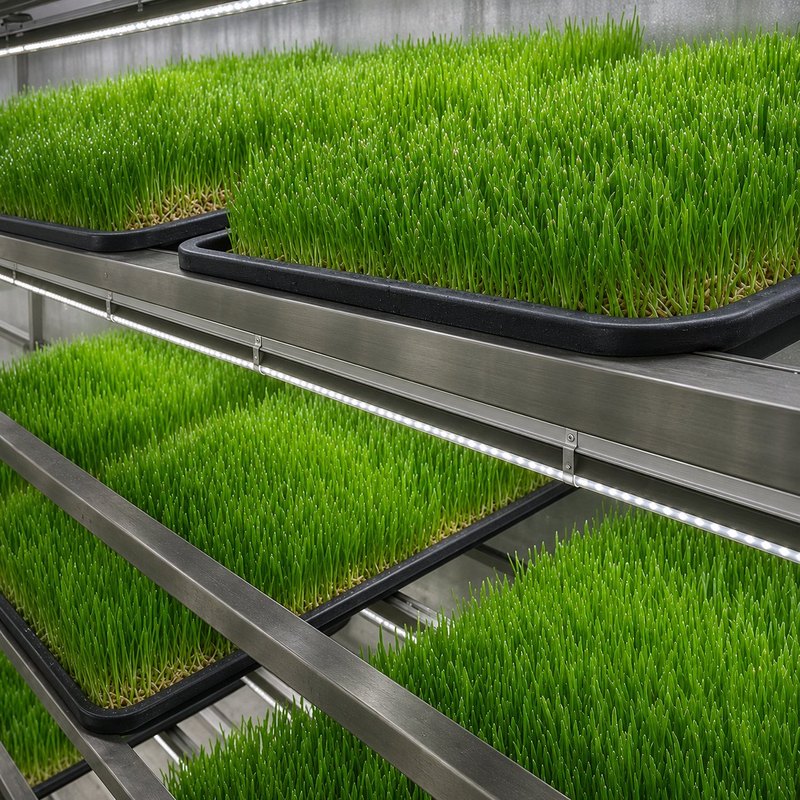
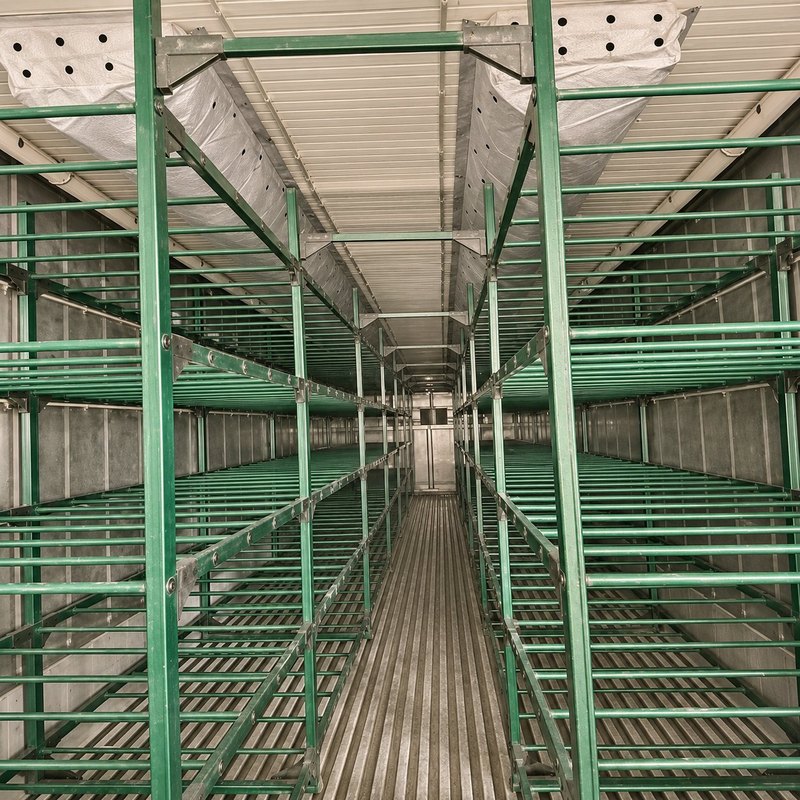
Hydroponic fodder uses a converted 40ft refrigerated container as the cabin: the outer steel shell is painted with anti-rust coating, the interior is fully clad in stainless steel, and the floor is profiled aluminium — slip-resistant, corrosion-resistant, easy to wash and drain, and able to withstand long-term high-humidity operation. Inside, two rows of 2.3m-high multi-tier racks carry hydroponic troughs and growing trays, working with a water circulation system through the sequence soaking and disinfection → germination → seedling raising → maturation → harvest, at roughly 7 days per crop, continuously in batches all year round. The cloud control system automatically regulates temperature, humidity, light, CO2 concentration and water/nutrient supply, so growth is almost independent of natural conditions.
02|Environmental Control
02 Environmental Control: How the Four Subsystems Work Together
◆ Intelligent temperature control + high-pressure mist + forced ventilation + full-spectrum lighting
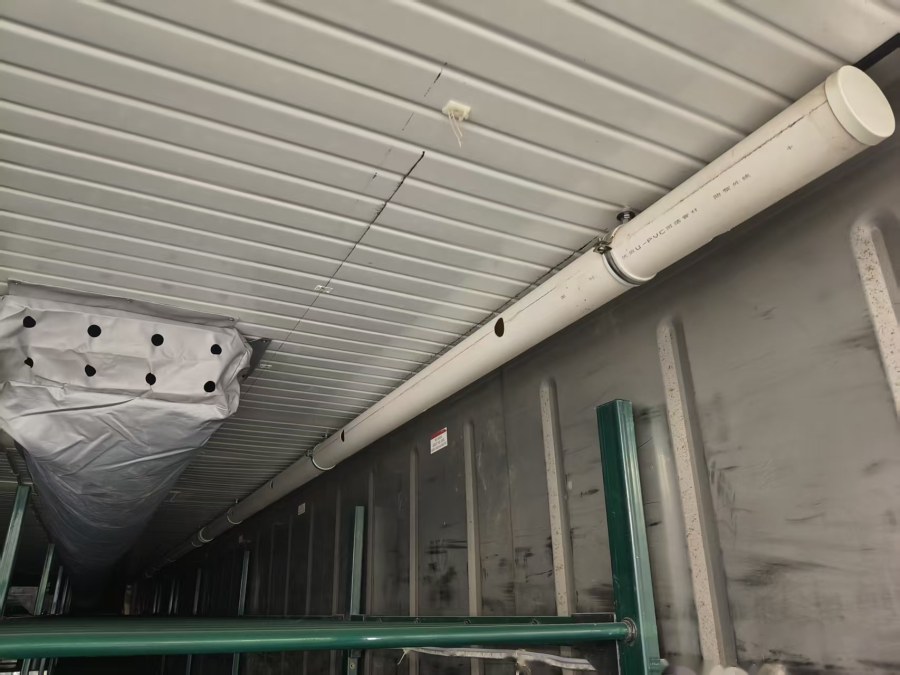
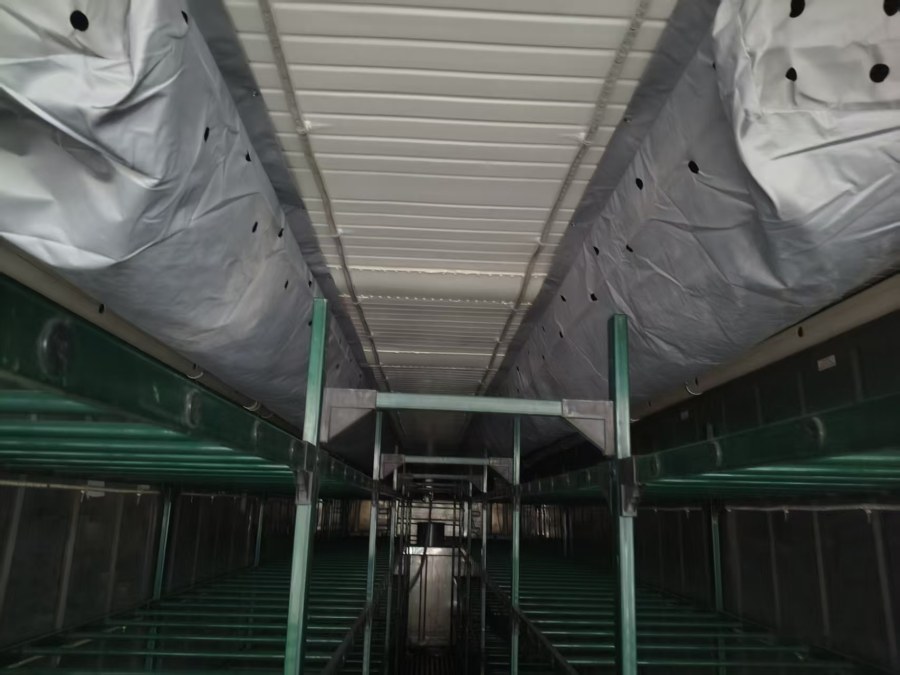
Temperature is held in the 15–25°C growing range by a 4HP intelligent energy-saving cooling/heating unit mounted in the container’s side bay so it takes no growing space and uses about 30% less power than a conventional unit; humidity is maintained at 60–95%RH by 30 stainless-steel high-pressure mist nozzles on the ceiling, with uniformity better than ±5%RH, the pump station delivering approx. 5μm mist at 6MPa; the fresh-air unit runs at 3000–8000m³/h in tandem with negative-pressure exhaust, continuously supplying fresh air and removing waste gas and excess moisture to avoid the stagnant, humid conditions that trigger disease; SMD3030 full-spectrum waterproof LED strips on the ceiling provide 0–1000lx adjustable illumination, switched and dimmed automatically by variety and growth stage.
03|Process Commissioning
03 Process Commissioning: Tuning Parameters to a Stable Production Rhythm
◆ Stage-by-stage temperature, humidity, light and water settings keep every crop on the same rhythm
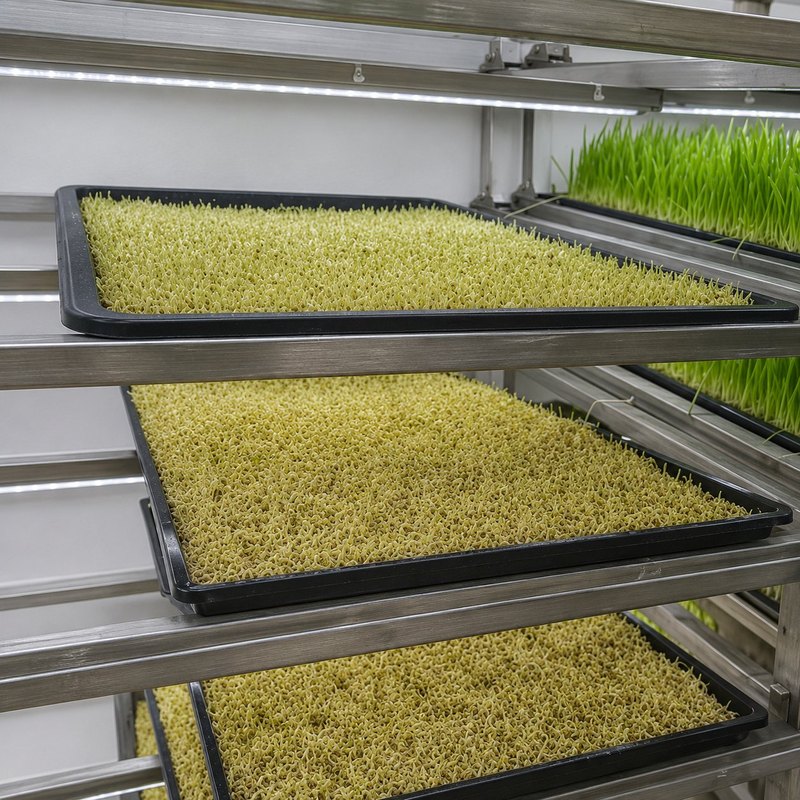
Commissioning is essentially about switching climate parameters as the fodder moves through growth stages: germination is kept warm and humid with weak light for even sprouting; the seedling stage raises light intensity step by step while maintaining mist frequency to encourage root-mat formation and upright growth; the maturation stage caps humidity and increases fresh-air exhaust to prevent mould and improve dry-matter accumulation. During commissioning, temperature and humidity sensor readings calibrate mist and fresh-air start/stop thresholds, and germination rate, plant height and yield are recorded per batch to build a standardized parameter template for that seed lot, which later batches reuse directly — commission once, replicate every batch.
04|Water and Nutrient Circulation
04 Water and Nutrient Circulation, Root-Mat Management: Water Always Flowing, Roots Never Rotting
◆ Root-mat cleanliness and water/nutrient rhythm determine seedling uniformity and crop stability
The roots sit directly in the circulating water of the troughs, so root-mat management comes down to keeping water moving and roots clean. The circulation system tops up on a timer linked to the water level, keeping the trough level stable; after each harvest the growing trays and troughs are rinsed to clear root residue and debris, preventing algae from clogging pipes and mist nozzles. Nutrients are supplied in stages: germination relies mainly on clean water to keep seeds in an evenly humid environment; the seedling and maturation stages supplement nutrients as growth proceeds and raise supply frequency, while ceiling mist maintains leaf-surface humidity. Root-mat mould is mostly caused by stagnant high humidity and retained root residue — capping humidity and increasing fresh-air exhaust in the maturation stage significantly reduces its incidence.